
The 30-Beat Rule: What the POTS Heart Rate Criteria Actually Say
The 30 bpm (40 in adolescents) sustained standing threshold for POTS, the active-stand and tilt context, and why home readings mislead.
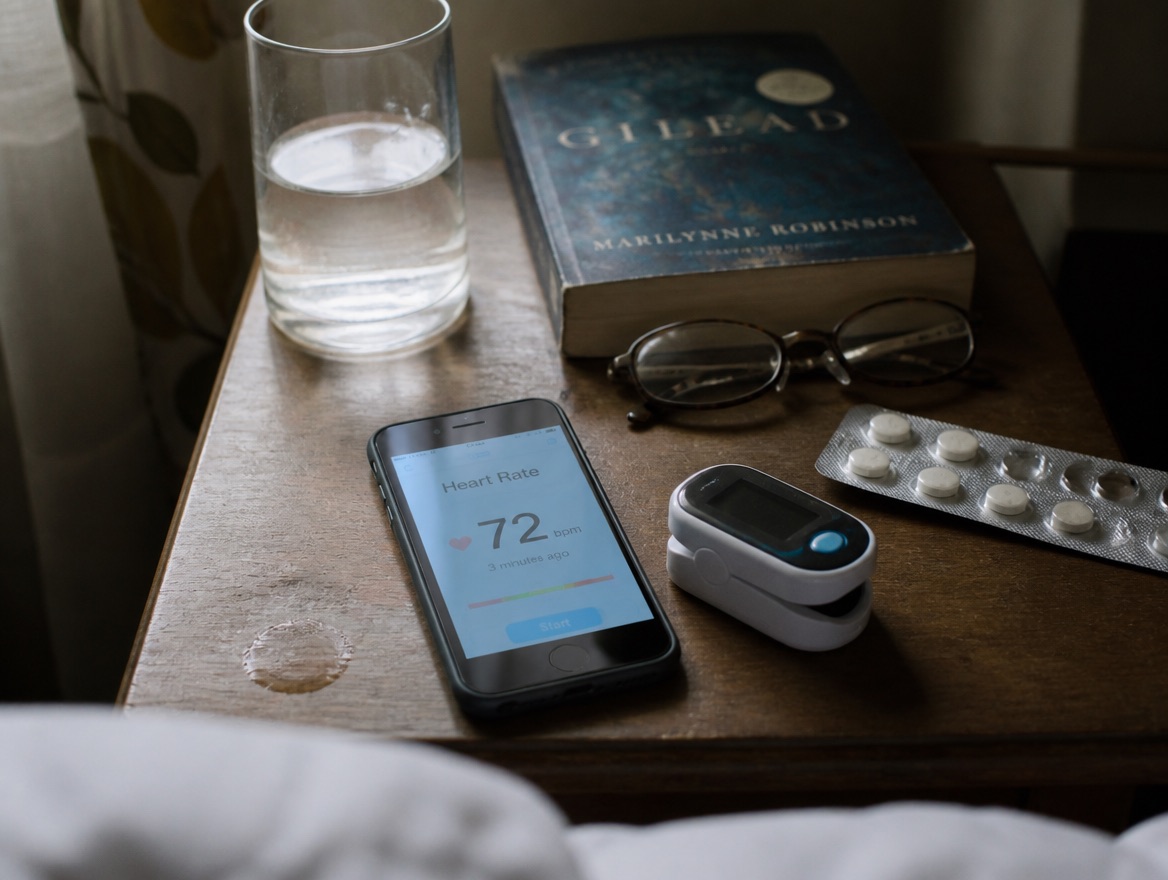
If you have read anything about POTS, you have met the number: 30 beats per minute. It sounds precise enough to test on your own kitchen floor with a fingertip pulse oximeter — and thousands of people do exactly that. Understanding what the criteria really say, and where a home reading quietly goes wrong, is the difference between a useful note for your clinician and a number that sends you into a spiral.
What the criteria actually say
POTS — postural orthostatic tachycardia syndrome — is defined by a sustained increase in heart rate on standing, without a matching drop in blood pressure. The consensus thresholds are:
| Group | Heart rate increase | Window |
|---|---|---|
| Adults | ≥ 30 bpm | Within 10 minutes of standing |
| Adolescents (roughly under 19) | ≥ 40 bpm | Within 10 minutes of standing |
Three words in that definition carry most of the weight. Sustained — the rise has to hold, not spike for a few seconds and settle. Within 10 minutes — the criteria look at the change across the first several minutes upright, not the instant you leave the chair. And without orthostatic hypotension — if your blood pressure falls substantially on standing (a sustained drop of about 20 mmHg systolic or 10 mmHg diastolic), that points toward a different diagnosis, orthostatic hypotension, which is managed differently.
There is usually a symptom requirement too: most consensus criteria expect the heart-rate change to come with orthostatic symptoms — lightheadedness, palpitations, brain fog, shakiness, the feeling of having to sit back down — and those symptoms typically ease when you lie down. A qualifying number on its own, with no symptoms, is generally not enough for a clinician to diagnose POTS.
Why the test is done the way it is
In a clinic, this is measured with a standing test (sometimes called an active-stand or NASA lean test) or a tilt-table test. Both exist to do one thing well: capture a stable resting baseline and then a sustained standing response.
The active-stand test looks deceptively simple. You lie down for several minutes until your heart rate settles, that resting rate is recorded, and then you stand and your heart rate and blood pressure are taken at intervals across ten minutes. The tilt-table test does something similar but straps you to a table that tilts you upright passively, so your leg muscles never pump — which can unmask a response that active standing hides.
The reason clinicians bother with all that setup is the same reason home testing is hard. The criteria are about a change between two carefully measured states. Get either state wrong and the change is meaningless.
Where home readings go wrong
None of this means you should not measure at home. A trend you record over days can be genuinely useful information to bring to your care team. It just means treating a single reading as a verdict is a mistake. Here is where the errors creep in.
Single readings. POTS is defined by a sustained rise, so one snapshot thirty seconds after standing tells you almost nothing. Everyone’s heart rate jumps transiently when they stand — that initial surge is normal physiology, not a diagnosis. What matters is whether the rate stays elevated across minutes.
Wrist and optical-sensor error. Wrist wearables and phone-camera apps estimate heart rate optically, and they are least accurate exactly when you need them most: during movement, with cold hands, or when your rate is changing quickly. A watch that reads beautifully at rest can lag or misread in the first minutes of standing. A fingertip pulse oximeter or a chest-strap monitor is generally steadier, though still not a clinic ECG.
Deconditioning. If you have been mostly horizontal for weeks, your heart rate response to standing will be exaggerated regardless of whether you have POTS. Deconditioning can mimic — and worsen — an orthostatic rise, which is one reason clinicians look at the whole picture rather than a single home number.
Time of day, meals, and hydration. Orthostatic heart rate is typically highest in the morning, after overnight fluid loss. A large or carbohydrate-heavy meal pulls blood to the gut and can push the rise higher for an hour or two. Under-hydration and low sodium do the same. Test after a big lunch versus first thing in the morning and you can get two different stories from the same body.
Anxiety and the measurement itself. Watching your own pulse climb is stressful, and stress raises heart rate — a small feedback loop that inflates the number. The act of anxiously checking can nudge the reading you are anxious about.
A shaky baseline. The standing number is only half the equation. If you never truly rested — if you checked your phone, or stood up to grab the oximeter and then lay back down — your “resting” rate is already elevated, which shrinks the apparent jump and can hide a real response. A good baseline means genuinely lying still for several minutes first.
How to make a home reading worth something
If you want to record numbers for your clinician, a little rigor goes a long way:
- Lie down and rest quietly for 5–10 minutes, then record that resting heart rate.
- Stand up and record your heart rate at intervals — for example at 2, 5, and 10 minutes — rather than once.
- Note the time of day, whether you had eaten or drunk recently, and any symptoms.
- Repeat on several different days. One morning is an anecdote; a week is a pattern.
- Use the steadiest device you have, and bring the raw numbers, not just your conclusion.
The bottom line
The 30-beat rule (40 in adolescents) is real, and it is a sustained rise within ten minutes of standing, with symptoms and without a blood-pressure drop. But the criteria were built around careful, standardized measurement, and a phone or wrist reading taken once, after lunch, on a stressful afternoon is not that test. Home numbers are a conversation-starter for your clinician, not a self-diagnosis. Record them well, bring them in, and let the person with the full picture — and the proper equipment — interpret what they mean.