
A Weekly Symptom-and-Hydration Tracking Routine
A simple weekly log that turns POTS guesswork into patterns — what to track, how to spot triggers over a week, and how to bring the data to your clinician.
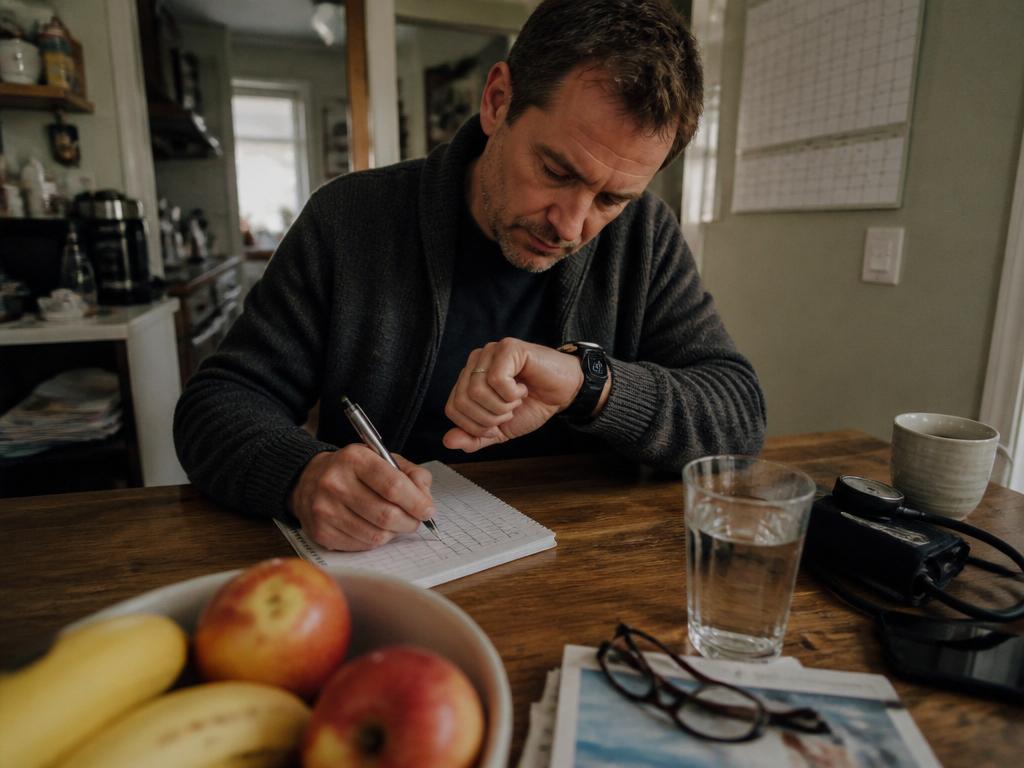
POTS varies day to day in ways that are hard to hold in your head. Was yesterday worse because of the heat, the poor sleep, the skipped fluids, or all three? A simple weekly log turns that guesswork into patterns you can actually see and act on.
What to track (and what to skip)
The biggest mistake people make with tracking is trying to record everything, which becomes a chore and gets abandoned within a week. The goal is a log light enough that you will actually keep it, focused on the handful of things that drive your symptoms.
A workable core to track each day:
- Symptoms: a rough severity rating and any standout episodes (a near-faint, a bad morning)
- Fluids: roughly how much you drank and whether sodium was part of it
- Sleep: how you slept, since it strongly colors the next day
- Likely triggers: heat, prolonged standing, a big activity, a stressful event
- Anything notable: where you are in your cycle, a medication change, an unusually good or bad day
What to skip is anything you will not sustain or cannot act on. You do not need minute-by-minute detail or precise measurements of everything. A quick note morning and evening is enough, and “good / okay / rough” ratings are perfectly useful. Make it boring and fast on purpose — a log you keep beats a perfect one you quit. A small notebook or a notes app both work fine; the format matters less than the consistency.
Spotting triggers over a week
The value of a week of notes is that patterns emerge that single days hide. One bad morning tells you little; five logged days start to reveal why your bad mornings happen.
After a week, read back over your entries and look for things that travel together. Do rough days tend to follow short sleep? Do they cluster on hot afternoons, or after a day with a lot of standing, or when your fluids and sodium dipped? Do good stretches share something — steadier hydration, lighter schedules, cooler weather?
| Look for | Possible pattern |
|---|---|
| Rough days after poor sleep | Sleep may be a key lever for you |
| Symptoms on hot days | Heat management deserves more attention |
| Bad afternoons after low fluid mornings | Front-loading hydration may help |
| Better days with steady sodium | Your loading routine is doing something |
These are hypotheses, not certainties — correlation in a personal log is a clue, not proof. But clues are exactly what you need to experiment thoughtfully, change one thing at a time, and see whether it helps. Over several weeks, that loop of tracking and small adjustments is how vague struggle turns into a manageable pattern.
Bringing the data to your care team
A tracking log is not just for you. It is one of the most useful things you can bring to an appointment, because it turns “I feel bad a lot” into something specific your clinician can work with.
Memory is unreliable, especially when symptoms include brain fog, and appointments are short. A summary of your weeks — your typical patterns, your worst episodes, what seems to trigger them, how your hydration and sleep track against your symptoms — gives your clinician real information instead of a vague impression. It can surface connections you might not have flagged and help shape decisions about your management.
You do not need to hand over raw daily pages. A short summary of what you have noticed is usually more useful than a wall of data: the patterns, the questions they raise, and anything that worried you. Crucially, this log helps you and your clinician work together, but it is not a substitute for their judgment. You are gathering observations; they interpret them and decide what to do, including anything that needs medical assessment.
The bottom line
A light weekly log of symptoms, fluids, sleep, and likely triggers turns POTS guesswork into visible patterns. Keep it simple enough to actually sustain, then read back over a week to spot what your rough and good days have in common. Treat those patterns as clues for small, one-at-a-time experiments, and bring a short summary to your clinician — observations for them to interpret, not a replacement for their care.