
Why POTS Gets Worse After Meals (and What to Change at Lunch)
Splanchnic blood pooling explained in plain language, plus carb-load, portion-size, and timing changes that often take the edge off the post-meal crash.
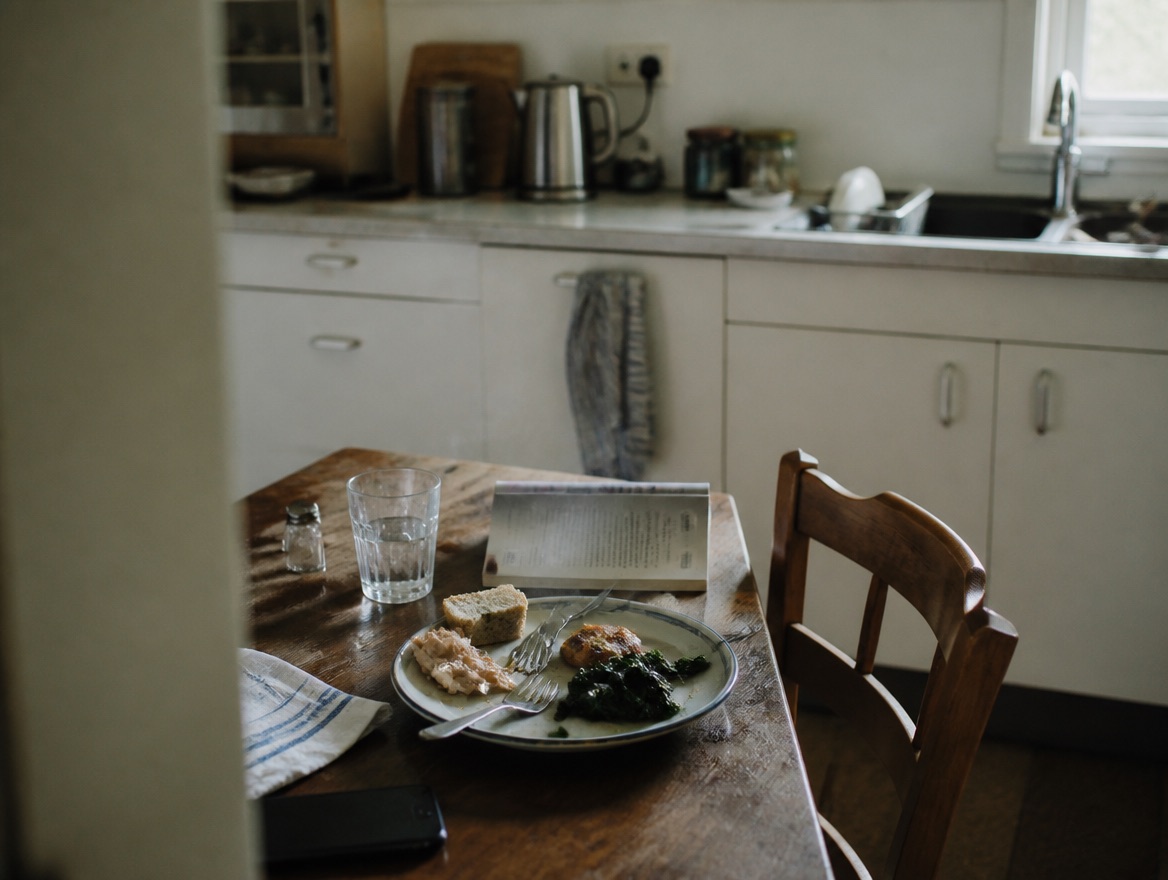
There is a particular kind of afternoon crash that POTS patients learn to dread: you sit down to a normal lunch, eat what feels like a sensible portion, and twenty minutes later you cannot string a sentence together. The heart rate climbs, the head fogs, the legs feel heavy, and the rest of the day quietly disappears. This is not a coincidence and it is not in your head. It is a real autonomic response with a name — postprandial symptoms — and the mechanism behind it is straightforward enough that, once you can see it, the meal itself becomes something you can work with rather than around.
This piece is general education. The specific changes worth trying belong in a conversation with a clinician who knows your history, especially if you are on a beta blocker or a blood-pressure medication that interacts with meals.
What is actually happening in the gut after a meal
The blood supply to the digestive tract is generous. After a sizeable meal — particularly one heavy in refined carbohydrate — the vessels feeding the small intestine open up to deliver oxygen and absorb nutrients. That redirection of blood toward the gut is normal. In healthy autonomic regulation it is matched by a tightening of vessels elsewhere and a small bump in heart rate, so the brain and the rest of the body keep their share.
In POTS, that matching response is unreliable. The blood pools in the abdominal vessels, the rest of the body undercompensates, and the cardiovascular system tries to make up the difference the only way it knows how — by pushing the heart rate higher. The result is the familiar post-meal cluster: tachycardia, lightheadedness, fatigue, brain fog, and sometimes nausea. It is a perfusion problem, not a digestion problem, and it tends to start within twenty to forty minutes of the first bite.
The term clinicians use for it is splanchnic blood pooling, after the splanchnic circulation that drains the gut. It is a well-described feature of dysautonomia and one of the more common reasons POTS patients describe lunch as their hardest meal of the day.
Why some meals hit harder than others
Three meal qualities tend to push postprandial symptoms further:
| Meal quality | Why it tends to worsen symptoms |
|---|---|
| Large portion | More gut volume, more vascular dilation, longer recovery |
| High refined carbohydrate | Rapid glucose absorption triggers a bigger insulin response, which is itself vasodilatory |
| Hot temperature | Stacks thermal vasodilation onto the gut-blood shift |
Combine all three — a hot bowl of pasta, eaten quickly, at noon, on an empty stomach — and the post-meal crash is essentially engineered. Combine none of them — small, room-temperature, protein-and-fat-forward, sipped over thirty minutes — and many patients notice the difference within a week of trying it.
Alcohol amplifies all three effects and is worth knowing about in advance of social meals; that conversation deserves its own article.
Practical changes that often help
These are not cures. They are levers that have moderate, repeatable effects in the postprandial POTS literature and in patient reports. Pick one or two and try them for ten days before deciding whether they work for you.
- Eat smaller, more often. Four or five small meals tend to produce a much smaller splanchnic shift than two large ones. The total food can stay the same; the portion at any one sitting is what matters.
- Lead with protein and fat, hold the refined carbs. A lunch built around eggs, beans, fish, leftover meat, cheese, nuts, or yoghurt — with vegetables, and bread or pasta in a supporting role — slows absorption and softens the vascular response. The point is not to go low-carb in the dieting sense. It is to avoid front-loading the meal with the kind of carbohydrate that drops fastest.
- Pre-hydrate before you sit down. Drinking 300–500 ml of water with electrolytes in the ten minutes before a meal has been shown in small studies to blunt the post-meal heart-rate rise. It is one of the few interventions with experimental support specific to postprandial POTS.
- Slow the meal down. Twenty to thirty minutes of eating, water alongside, no rushing back to standing. The vascular response is gradual; meeting it slowly tends to be easier than meeting it all at once.
- Stay seated, or reclined, for twenty minutes afterwards. Standing during the peak of the splanchnic shift is the worst combination of stressors and the one most likely to produce a near-faint. Pushing the return-to-standing back by a quarter of an hour is often enough.
- Plan the day around the meal, not against it. If lunch reliably wrecks the next ninety minutes, demanding tasks belong before it or two hours after, not immediately after. This is pacing, not avoidance — and patients who treat the post-meal window as a known cost rather than a daily surprise tend to feel less broken by it.
What to bring to a clinician
If postprandial symptoms are a dominant part of your day, a short dated log helps the conversation. Note the meal (portion, contents, temperature), the symptoms (heart rate, lightheadedness, fog), and the time course (when it started, when it eased). Three or four such entries across a week give a clinician something concrete to work from — and that often shifts the discussion from “see if you can eat differently” to a more specific plan that might include compression, a structured pre-meal fluid load, or medication timing changes around meals.
Beta blockers and pyridostigmine are sometimes used to soften postprandial responses, and an established medication taken right before instead of right after lunch can occasionally change how a meal lands. None of that is something to adjust on your own.
The bottom line
The post-lunch crash that POTS patients describe is a real cardiovascular event with a name, a mechanism, and a small set of practical levers that often help. Smaller meals, lower refined-carb load, water before sitting down, and a quiet twenty minutes after — most patients can try those without anyone’s permission, and most who do find that lunch stops costing the rest of the afternoon. The harder version of the same problem, the kind that wrecks every meal regardless, deserves to be brought to a clinician with the symptom log in hand. Either way, the meal stops being the mystery it can feel like at first, and that alone changes what is possible to plan around it.